

Find your registration Search the Innovation Fair

Enabling R&D in Bangladesh: Policy, Regulation and Market Conditions for Innovation

Chair
Mr. Ahsan Habib

Mr. Ahsan Habib

Acting Chairman, National Board of Revenue (NBR)

Keynote
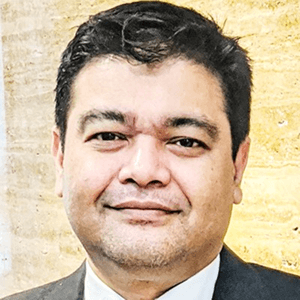
Pial Islam

Pial Islam

Managing Partner at pi STRATEGY, and member of international Expert Network at the World Economic Forum
Moderator
Ashraf Ahmed

Ashraf Ahmed

Chief Executive Officer (CEO), Riverstone Capital Limited and Former President of DCCI

Distinguished Panelists

Mohammad Kudratullah, Director, Applied Tech, ACI; Dr. Imran Mahmud, Professor, Daffodil International University; Gm Faysal Taysire, Student, Cuet; Owais Pary, Senur Econung, UNDP; Md. Saiduzzaman Sunny, Program Anger, FBCCI ; Reasmen, Pistonget; Dr. Md. Nazrul Islam Khan, Chief Scientific Officer, Baec; Dr. Md. Abu Layen, Professor, University Jagannath; Hoque Abir Md Ahsanul, Student, University Jagannath; Dr. M.S. Bashar, PSO, BCSIR; Nuhad Bin Aziz, Student, Baust; Rukunezzzaman Zim, Student, JSTU; Sowrav Hossain, Student, BAUST; Dr. Md. Khalekuzzaman, Professor, KUET; Md. Matrfuzul Islam, Student, Environmental, JU; Tabassum Mustofa Mim, Student, Dept. Of Zoology, JU; Dr. Rashedul Islam, Lecturer, Engg & Biotech Dept. Of Gueretic Nology. RU; Md. Zakania Islam, Student, Dept. Of Biomedical Qurt; Md. Akheruzzaman, Student, Faculty, Hstu Dept. Of Plant Pathology, Agriculture; Jafar Ahmed Patwary, General Manager, Daffodil Group.

Main Topic Discussed

  • Systemic barriers preventing R&D from moving beyond the lab to market: Raised by Moderator Dr. Shafqat, Mahiuddin Firoz (ACI), and Dr. Latifur Bari (Bangladesh Academy of Sciences). Critically low R&D investment (under 0.3% of GDP vs. China 2.4%, South Korea 5%): Raised by Moderator Dr. Shafqat and Dr. Latifur Bari. The need for stronger R&D financing mechanisms (tax credits, grants, CSR, private sector): Raised by Mahiuddin Firoz (ACI) and Zia Hasan (Five Strata). Customs duties, VAT, income tax, and import difficulties for lab equipment: Raised by Mahiuddin Firoz (ACI) and Dr. Rashidul Islam (University of Rajshahi). Technology access gaps (software, cloud, AI, datasets) due to payment gateways: Raised by Mahiuddin Firoz (ACI). Weak linkages between universities, research institutions, and industry: Raised by Dr. Latifur Bari, Dr. Nazmul Alam (Daffodil University), Professor Dr. Baset (BUET), and an Industry Representative. Intellectual property (IP), patent protection, researcher incentives, and benefit-sharing: Raised by Mahiuddin Firoz (ACI), Dr. Latifur Bari, and Professor Dr. Baset (BUET). The need to reform Public Procurement Rules (PPR): Raised by Dr. Md. Morshed Hasan Sarker (BCSIR) and Moderator Dr. Shafqat. Emphasizing identification of national priority areas for R&D: Raised by Moderator Dr. Shafqat and Ovais Parray (UNDP). The role of government in creating an enabling ecosystem while allowing private-sector risk-taking: Raised by Moderator Dr. Shafqat and NBR Representative.

Key Challenges Mentioned

  • 1. Low R&D Investment: Bangladesh invests well under 0.3% of GDP in R&D, with minimal private-sector participation.
  • 2. Commercialization Gap: Many research projects stop at the publication or thesis stage and do not progress to prototypes or commercial products.
  • 3. Inadequate Infrastructure: Universities and research institutions often lack adequate funding and state-of-the-art equipment.
  • 4. Customs and Certification Bottlenecks: High customs duties and unclear certification requirements delay or prevent the import of research equipment and materials. Researchers face conflicting requirements from different agencies (e.g., Customs, Atomic Energy Commission, BCSIR).
  • 5. Payment Gateway Restrictions: Young researchers and startups face difficulties paying for international software, cloud services, AI tools, and datasets due to complex payment and foreign-exchange restrictions (passport, credit card, endorsement requirements).
  • 6. Weak IP Protection: Patent enforcement can take 5–7 years in traditional courts, reducing confidence in investing in innovative products. Weak enforcement discourages innovation and international collaboration.
  • 7. Lack of Individual Incentives: Researchers have limited incentives to commercialize their inventions because rules regarding patent ownership, institutional shares, and individual benefits are unclear. Public-sector researchers focus on paper publication rather than commercialization.
  • 8. Export-Import Control Act (1950): The law does not recognize anything other than physical goods as exports, preventing R&D services from being treated as exportable.
  • 9. Industry-Academia Disconnect: Industry often purchases solutions from abroad instead of working with local universities and researchers. CSR funds are not directed toward research.
  • 10. Curriculum Approval Delays: It takes four years to approve a curriculum in universities, by which time the market has already changed.
  • 11. Student Project Waste: Thousands of student projects (e.g., ~3,000 CSE graduates per year from Daffodil International University) are not commercialized and are lost.
  • 12. PPR (Public Procurement Rules): Research organizations face great difficulties due to PPR rules and tendering processes.
  • 13. Narrow Tax Base: 70–80% of taxes come from approximately 8,000–10,000 taxpayers; approximately 70 lakh (7 million) MSMEs remain outside the tax net.
  • 14. Fiscal Constraint: Bangladesh's tax-to-GDP ratio is only 6.6%, severely limiting the government's fiscal capacity for R&D investment.
  • 15. Low Acceptance of Private Sector Proposals: Only 2–3% of several hundred tax-related proposals from the private sector are accommodated by the NBR.
  • 16. No Clear Policy for Academic Entrepreneurship: Public university teachers are restricted from undertaking business ventures alongside their employment.
  • 17. Prioritization Problem: Bangladesh tries to do everything at once, leading to a lack of focus and resources spread across too many initiatives.

Ideas and Solutions

  • 1. R&D Tax Incentives: Introduce R&D tax credits/super-deductions and targeted customs/VAT relief for genuine research activities.
  • 2. Duty-Free Research Inputs: Provide duty-free or simplified import procedures for laboratory equipment, research materials, and other R&D inputs.
  • 3. Fast-Track IP Tribunal: Establish a fast-track IP/patent dispute mechanism or specialized tribunal to reduce enforcement time and build international confidence.
  • 4. IP Revenue-Sharing Framework: Create a clear mechanism allowing researchers, universities, and institutions to benefit financially from patents and successful commercialization.
  • 5. Payment Gateway Simplification: Enable researchers and institutions to legally and easily access international software, cloud services, AI tools, and datasets.
  • 6. Commercialization Pathway: Develop a stronger pathway from research → prototype → pilot production → commercial production → market.
  • 7. Industry-Linked PhD Programmes: Develop joint supervision mechanisms involving supervisors from academia, industry, and research institutions.
  • 8. Shared Research Facilities: Create shared research laboratories and equipment facilities between universities, research organizations, and industries (e.g., pharmaceutical companies allowing university access to R&D labs and reference materials through CSR or low-cost payment).
  • 9. CSR Funding for Research: Encourage industry to direct CSR funds toward national and industry-specific problem-solving research.
  • 10. PPR Reform: Reform Public Procurement Rules to allow government agencies to adopt innovative products and solutions more easily.
  • 11. Government as First Customer: Develop regulatory sandboxes and government first-purchase/procurement mechanisms (modeled on China's BYD electric bus strategy) to help new technologies enter the market.
  • 12. Professional Incubation: Establish professional incubation and acceleration mechanisms involving experienced entrepreneurs rather than relying only on government bureaucracy.
  • 13. National R&D Priorities: Identify a limited number of national R&D priorities, including both high-probability sectors and selected long-term "moonshot" areas.
  • 14. Tax Base Expansion (SME Formalization): Bring MSMEs into the tax net through flat rates, pre-fixed payments, cashless digital payments, amnesty/clean-slate approach for past non-compliance, and an initial audit-free window of 3–5 years.
  • 15. "Taxing for Growth" Approach: Remove obstacles to economic growth (e.g., withdrawing the 2% stamp duty on bonds) to expand the tax base and generate more revenue over time.
  • 16. Mission-Based R&D Approach: Adopt a state-driven and industry-driven approach for mission-oriented research, identifying specific problems for focused funding.
  • 17. Innovation Hub: Connect promising R&D projects with financing, technical support, testing, certification, and commercialization opportunities.
  • 18. Decentralization: Distribute R&D opportunities and resources beyond Dhaka.
  • 19. Communication Strategy: The government should communicate that innovation involves failure and experimentation; not every project will succeed.

Examples

  • 1. BYD, China: Government subsidies and public procurement, including mandating municipal corporations to operate electric buses, helped create demand and allowed BYD to scale its electric-vehicle business.
  • 2. China and South Korea: Their significantly higher R&D investment levels (2.4% and nearly 5% of GDP, respectively) were cited as examples of countries that deliberately invested in innovation.
  • 3. Nitrogen-Fixing Bacteria: A fertilizer technology using nitrogen-fixing bacteria is already used on a large scale in South America, but the bacterial strain is adapted to South America. Bangladesh would need to develop a locally adapted strain through specific R&D investment—demonstrating the need for technology adaptation R&D.
  • 4. India's SME Tax Base Expansion (Zia Hasan, Five Strata): From 2016 to 2024, the number of SMEs under the tax system increased from around 500,000 to 15 million (a 30-fold increase). Previously 46% of total tax collection came from large companies; this fell to around 30% as the tax base widened. India spent around $500 million over five years and collected around $180 billion from this segment.
  • 5. Kenya's Taxpayer Growth: Grew the number of taxpayers from around 1 million to 5 million in five years.
  • 6. NBR Bond Stamp Duty Example (Moderator Dr. Shafqat): A law from around 1885 required a 2% stamp duty on bond/debenture issuance. Until 2019, the NBR received essentially zero revenue from this. In 2019, when the NBR withdrew this tax, around Tk 20,000–30,000 crore worth of bonds were issued over the following four to five years, generating around Tk 1,000 crore in income tax and advance income tax for the NBR. This is an example of "taxing for growth."
  • 7. Oral Saline: Presented as Bangladesh's most important life-saving technological innovation, saving billions of lives globally.
  • 8. Microfinance/Grameen: Cited as an example of business-model innovation (group guarantee instead of individual collateral) rather than technological innovation.
  • 9. bKash: Bangladesh's first unicorn, which emerged from regulatory/business-model innovation (branchless banking).
  • 10. Bangladesh EPI Programme: Cited as an example of a successful large-scale national innovation/implementation model.
  • 11. Pharmaceutical Sector: Shared laboratory facilities were proposed because expensive equipment such as TLC machines and differential scanning calorimeters (costing Tk 1–1.5 crore) may only be required a few times a year by individual institutions.
  • 12. Power Sector Tax Benefits: NBR study found the power sector received the most customs benefits, followed by agriculture, education, and health.
  • 13. Powdered Milk Study: An NBR study on powdered milk found that a major portion of incentives, exemptions, and tax expenditures actually goes to rich people, upper-level industrialists, large businessmen, and high-income taxpayers.

Recommendations

      1. Develop a comprehensive national R&D and innovation policy focused on commercialization rather than publication alone.
      2. Introduce targeted R&D tax incentives, including tax credits/super-deductions and customs/VAT relief for research inputs.
      3. Simplify and clarify customs and certification procedures for R&D equipment and materials.
      4. Establish clear IP ownership and benefit-sharing rules for researchers, universities, and research institutions.
      5. Strengthen patent enforcement and consider a fast-track mechanism for IP disputes.
      6. Build formal university-industry-research institution partnerships.
      7. Establish shared laboratories and research infrastructure to reduce duplication of expensive equipment.
      8. Reform public procurement rules to make them more supportive of innovative products and technologies.
      9. Introduce mechanisms such as government first-purchase and regulatory sandboxes to create early markets for innovation.
      10. Increase private-sector and CSR investment in R&D.
      11. Develop mission-oriented R&D around a small number of nationally important sectors.
      12. Create professional incubation and acceleration programmes with private-sector entrepreneurs and risk-takers.
      13. Improve access to international digital tools, software, cloud services, and research datasets.
      14. Encourage government, industry, and research institutions to jointly identify real-world problems that require locally developed solutions.
      15. Expand the formal tax base, particularly among MSMEs, through simpler and more predictable compliance mechanisms (amnesty, flat rates, audit-free windows).
      16. Prepare for LDC graduation by moving from labor-cost competitiveness to innovation-driven competitiveness.
      17. The government should adopt a "taxing for growth" mindset rather than just increasing tax rates.
      18. All stakeholders should focus on frugal innovation and experimentation, acknowledging that not all initiatives will succeed.

Important Facts or Numbers

  1. R&D Investment: Bangladesh invests well under 0.3% of GDP in R&D (UNESCO Institute for Statistics).
  2. Comparative R&D: China invests roughly 2.4% of GDP; South Korea nearly 5%.
  3. Tax-to-GDP Ratio: Bangladesh's is only 6.6%, compared to India (16%), Nepal (18%), and Sri Lanka (22%).
  4. Tax Revenue Target (FY2026): Target was roughly Tk 5 lakh crore; actual collection was around Tk 4.15 lakh crore.
  5. Future Tax Target: Approaching Tk 6 lakh crore, requiring a ~45% increase in one year. NBR representative cited a target of approximately Tk 6.04 lakh crore.
  6. Normal Revenue Growth: Around 10–12% annually, making a 45% increase extremely challenging.
  7. Narrow Tax Base: 70–80% of taxes come from approximately 8,000–10,000 taxpayers.
  8. SMEs Outside Tax Net: Approximately 70 lakh (7 million) micro, small, and medium enterprises remain outside the tax net.
  9. SME Survey: Conducted with around 650 SME clients (Zia Hasan, Five Strata).
  10. India SME Tax Base: Grew from ~500,000 to 15 million (30-fold increase) between 2016 and 2024. Spent ~$500 million over five years, collected ~$180 billion from the small-business segment.
  11. Kenya Taxpayer Growth: From ~1 million to 5 million in five years.
  12. Tax Expenditure (Customs): Around Tk 40,000–50,000 crore is forgone through customs exemptions.
  13. Customs Collection vs. Target: Target was Tk 50,000 crore; actual collection was Tk 17,000–18,000 crore.
  14. Daffodil University (Dr. Nazmul Alam): ~5,500 students in Software Engineering; ~12,000 in CSE; ~3,000 CSE graduates per year.
  15. Laboratory Equipment Costs (Dr. Rashidul Islam): A TLC machine or differential scanning calorimeter may cost Tk 1–1.5 crore.
  16. IP Court Delays: A case may take 5–7 years to resolve in the traditional court system.
  17. Bond Stamp Duty Example: Withdrawal of 2% stamp duty led to Tk 20,000–30,000 crore in bond issuance and ~Tk 1,000 crore in income tax for NBR.
  18. VAT Rate in Bangladesh: 15% standard rate (with 0% and other slabs); Europe's GST/VAT is around 9–10%.
  19. Private Sector Tax Proposals: Several hundred submitted annually; only 2–3% accommodated by NBR.
  20. Audit-Free Period Proposal: 3–5 years for newly formalized MSMEs.

Follow-up / Commitments

  1. Further assessment of R&D tax incentives, super-deductions, and customs/VAT relief was proposed.
  2. NBR and relevant ministries should examine specific HS codes and existing exemptions for laboratory and research equipment.
  3. Government, industry, universities, and research institutions should jointly identify priority R&D areas and national problems requiring innovation.
  4. More structured university-industry-research collaborations should be developed, including industry-linked PhD programmes.
  5. Shared laboratory and research facilities between universities and industries should be explored.
  6. Public procurement rules should be reviewed to facilitate adoption of innovative products.
  7. IP ownership, commercialization, and researcher benefit-sharing mechanisms require further policy development.
  8. A coordinated framework involving NBR, Finance Ministry, industry, and research institutions should be developed to support R&D commercialization.
  9. The proposed Innovation Hub could connect promising R&D projects with financing, technical support, testing, certification, and commercialization opportunities.
  10. NBR Representative committed to considering specific HS code issues raised by universities and research institutions for laboratory equipment, and noted significant benefits already provided for the semiconductor industry.
  11. NBR Representative noted that the NBR collects taxes but does not have authority over expenditure; universities may submit budget proposals to the Ministry of Finance for research funding.
  12. NBR Representative acknowledged the need to increase the number of taxpayers and expand the tax base.
  13. Moderator summarized three main areas for support: tax waivers, direct government grants, and public procurement.
  14. Moderator emphasized that incubation and acceleration programs do not work in the public sector and must be private-sector driven with entrepreneurs as natural risk-takers.
  15. All participants reached consensus on the need for a modern, forward-looking R&D policy, mission-based approaches, and stronger industry-academia-research integration.
  16. All participants agreed on the need for "taxing for growth" rather than just increasing tax rates.

Other Important Points

  1. The central problem is not a lack of ideas or research capacity; rather, Bangladesh struggles to move ideas through the commercialization pipeline.
  2. Speakers emphasized that innovation should not be understood only as advanced technology. Business-model and regulatory innovation can also create major national impact (as seen with microfinance, bKash, and oral saline).
  3. Government should accept that innovation involves failure and experimentation. Not every project will succeed, and this must be communicated to the public.
  4. There was strong support for a more mission-oriented approach, where government and industry define real problems and researchers work toward practical solutions.
  5. The discussion highlighted the need to distinguish between basic research, applied research, technological innovation, business-model innovation, and regulatory innovation.
  6. The government should focus on creating an enabling environment rather than trying to directly manage every innovation project.
  7. Private-sector entrepreneurs and professional investors may be better positioned than traditional administrative structures to manage high-risk incubation and acceleration.
  8. Bangladesh's upcoming LDC graduation makes productivity, competitiveness, and innovation increasingly important; the country can no longer compete on low-cost labor alone.
  9. The "Valley of Death" in R&D financing—the gap between initial research grants and commercial scaling capital—was highlighted as a critical barrier.
  10. Industry must approach academia and trust local researchers more, rather than relying solely on foreign solutions.
  11. The NBR's dilemma: the NBR faces enormous pressure to increase revenue while also being asked to provide tax exemptions; both sides have a problem, but a way forward must be found.
  12. Public Procurement Rules (PPR) create great difficulties for research organizations; relaxation is needed.
  13. Agricultural research has reached the field level because it has its own extension channel; industry lacks such a channel.
  14. In other countries, university professors become entrepreneurs; in Bangladesh, public university service rules restrict this.
  15. UGC has taken an initiative regarding Technology Transfer Offices (TTOs) for patenting, but their effectiveness is not yet visible.
  16. NBR already provides VAT and income tax concessions for startups, content creation, and IT-related activities.
  17. For medical research, equipment for public and private institutions and universities receives tax exemptions in some cases.
  18. Bangladesh's large market (around $500 billion economy) is a major opportunity for R&D and innovation.
  19. Government service rules make it difficult to do something new quickly; PPR and tendering processes can cause projects to get stuck.
  20. The Bangladesh Government's R&D policy needs to be updated to provide recognition to researchers and introduce proper regulations.

End of the Session

Top message 1: Bangladesh's biggest R&D challenge is not a shortage of ideas or talent; it is the weak pathway from research to prototype, pilot production, commercialization, and market adoption—compounded by customs bottlenecks, weak IP protection, and a lack of meaningful R&D tax incentives.
Top message 2: Tax, customs, IP, procurement, and institutional rules need to become more innovation-friendly so that researchers and businesses have a real incentive to invest in R&D. The most promising solutions combine fiscal instruments, regulatory reform, and government action as a first customer—supported by a "taxing for growth" approach to expand fiscal space.
Top message 3: With limited fiscal resources, Bangladesh should prioritize a small number of mission-driven R&D areas and build stronger partnerships between government, industry, universities, and research institutions. Industry must approach academia, direct CSR funds toward research, and share laboratory facilities, while the government must accept that experimentation and some failure are acceptable in R&D.
One key recommendation: Develop a coordinated National R&D Commercialization Framework combining targeted tax/customs incentives, clear IP benefit-sharing, faster testing and patent enforcement, shared research facilities, industry-linked research, simplified payment gateways for global tools, and innovation-friendly public procurement—coordinated through an Innovation Hub that connects R&D projects with these support instruments.

Countdown

Happening Now

1351Days : 08Hours : 15Mins : 05Secs

Event Info

  • Time
    10:00 AM - 11:30 AM
  • Date
    September 13, 2026
  • Location
    Novo Theatre, Dhaka

Event Files