Find your registration Search the Innovation Fair

Connectivity as Productive Infrastructure: Powering Bangladesh’s Next Innovation Economy

Moderator
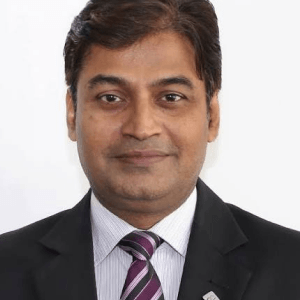
T I M Nurul Kabir

T I M Nurul Kabir

Executive Director , FICCI

Panelist
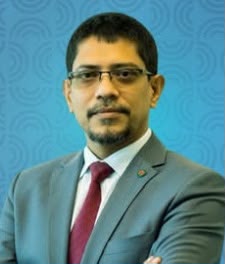
Md. Anwar Hossain

Md. Anwar Hossain

Secretary, Ministry of Science and Technology

Panelist
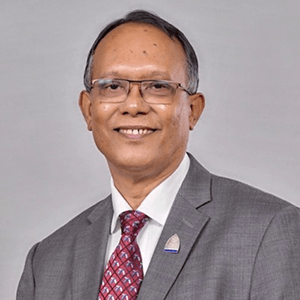
Murtuza Zulkar Nain Noman

Murtuza Zulkar Nain Noman

Joint Secretary, Information and Communication Technology Division, Ministry of Post, Telecommunication and Information

Panelist
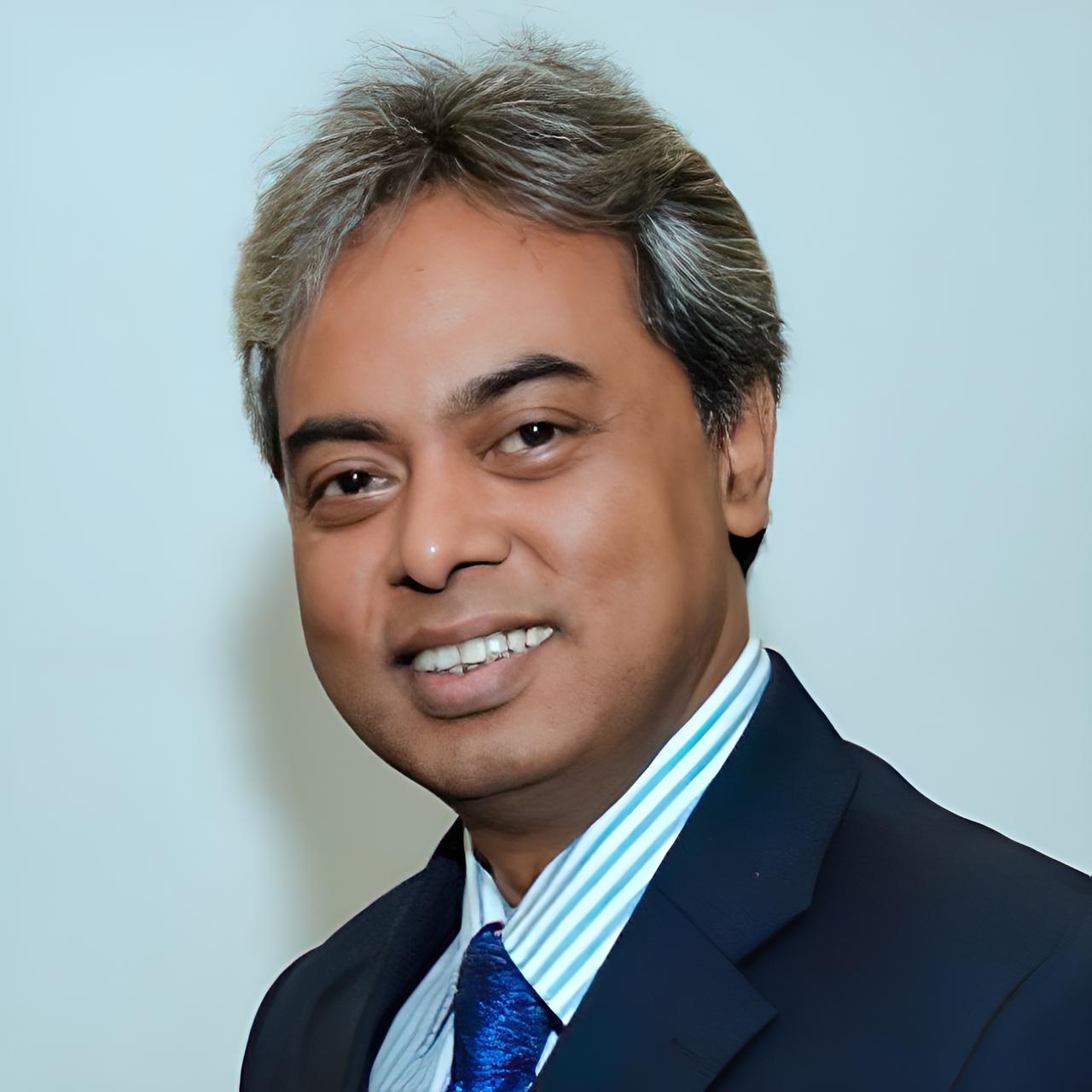
Md Shah Alam Patwary

Md Shah Alam Patwary

Deputy Managing Director & CEO, Dutch Bangla Bank

Panelist
Rubaba Dowla

Rubaba Dowla

Oracle Country Head of Bangladesh, Nepal and Bhutan

Panelist
A. S. M. Shamim Reza

A. S. M. Shamim Reza

Founder & Chief of Research, The Team Phoenix

Executive Summary

Session 01 addressed the strategic transition of digital connectivity from consumer-level communication into productive economic infrastructure. With Bangladesh achieving over 190 million mobile connections and 135 million internet subscribers, the discussion focused on leveraging this network to power core sectors — manufacturing, agriculture and healthcare — ahead of Bangladesh's impending Least Developed Country (LDC) graduation.

Key priorities identified included upgrading passive infrastructure (high-density power and cooling for GPU/AI computing), institutionalizing cybersecurity verification, establishing fiscal incentives for university R&D, and moving away from isolated private capital expenditure toward shared public and private compute infrastructure.

Defining the "Innovation Economy"
  1. Mr. A. S. M. Shamim Reza: emphasized that true innovation requires foundational security, privacy and sovereignty across both technological and non-technological solutions.
  2. Mr. Md. Shah Alam Patwary: highlighted practical automation and systemic efficiency that accelerates service delivery and adds direct value to the macroeconomy.
  3. Secretary Md. Anwar Hossain: stated that innovation encompasses iterative improvements that make homegrown, demand-driven products marketable, scalable and commercially viable.
  4. Ms. Rubaba Dowla: noted that an innovation economy mobilizes ideas, data, business models and human capital to enhance productivity, and cautioned against treating advanced technologies like 5G as vanity projects, urging targeted deployment where low latency and high capacity solve real industrial bottlenecks.
  5. Mr. Murtuza Zulkar Nain Noman: underscored that innovation must be value-additive, people-centric, adaptive and anchored in ethical frameworks to guard against societal risks like cyberbullying and unregulated data use.
Main Topics Discussed
  1. Transforming digital connectivity from basic personal communication into productive economic infrastructure for core sectors — industry, agriculture and healthcare.
  2. Artificial Intelligence (AI) readiness, data hygiene ("garbage in, garbage out"), and the need for high-density physical compute infrastructure.
  3. Strengthening the "Triple Helix" collaboration model, bringing together Government, Academia and Industry.
  4. Preparing national policy, research and intellectual property (IP) frameworks ahead of Bangladesh's upcoming LDC graduation.
  5. Establishing national data governance, legal protections and interoperable digital identity mechanisms.
Key Challenges
  1. Passive infrastructure bottlenecks: lack of reliable industrial power — GPU server racks require up to 100 kW each — and advanced cooling systems for high-performance computing.
  2. Academic-industry disconnect: university engineering curricula lag behind rapid tech advancements; students graduate without practical skills in modern fields like machine learning.
  3. Lack of R&D incentives: large corporations spend heavily on philanthropic CSR (education/healthcare) but do not invest in university R&D, as there are no tax rebates or matching grants.
  4. Transmission cost disparity: high domestic NTTN transmission costs keep rural broadband prices very high — BDT 800–1,000 in remote areas versus BDT 400–500 in Dhaka.
  5. Data security and silos: past national data leaks stemmed from basic architectural omissions (lack of database sanitization) rather than advanced hacking; data remains trapped in isolated silos.
  6. Operational friction: rural power instability forces banks to run expensive backup systems for ATMs; citizens face usability friction in digital services.
Ideas and Solutions
  1. Shared, government-backed GPU/AI compute: build shared public and private high-performance data centers rather than having individual banks and companies duplicate expensive GPU purchases.
  2. National Responsible Data Exchange (NRDX): an intermediary data exchange gateway that provides requesting agencies with filtered, anonymized query results instead of exposing raw citizen databases.
  3. One Citizen, One ID, One Digital Wallet: a unified, interoperable digital identity and payment framework that consolidates all accounts (e.g. bKash, Nagad, bank accounts).
  4. Digital BSTI: an institutionalized security certification authority — like BSTI for food safety — to mandatorily test and certify all software, apps and digital systems.
  5. Fiscal incentives for R&D: government tax rebates and matching grants (e.g. if a company gives BDT 100 to university research, the government matches BDT 100).
  6. Outcome-based KPIs: redefine national success metrics away from raw broadband coverage numbers toward measurable productivity gains and task-time reductions.
Examples Shared
International Examples
  1. Australia (2003): Telstra deployed broadband directly to doorstep thresholds, empowering consumers to choose between broadband or dial-up.
  2. Singapore: automated immigration and work-permit systems reduced work-permit processing times from 10 days down to 1 second, and processed 125 million border crossings seamlessly.
  3. Vietnam: aggressively reformed ease-of-doing-business indicators over a 20-year span.
  4. Global academic endowments: elite universities like MIT and Harvard maintain multi-billion-dollar research endowment funds heavily funded by industry.
  5. Estonia & Iran: Estonia's advanced e-governance models and Iran's domestic cyber-resilience under decades of severe economic sanctions.
Bangladesh Examples
  1. Dutch-Bangla Bank (DBBL): operates 4,500+ ATMs (~58% national share) and dedicated Tier IV data center facilities; disbursed BDT 5.4 billion in CSR scholarships and Math Olympiad sponsorships that helped students reach institutions like MIT.
  2. Local fair innovators: a local rental management app managing properties at BDT 200/month; a BUET engineer designing emergency vehicle automation, cutting unit costs from BDT 35 million down to BDT 800,000.
  3. Underutilized national labs: hidden advanced research facilities already exist locally, such as semiconductor cleanroom fab labs at BCSIR and the Bangladesh Atomic Energy Commission.
Recommendations
  1. Ministry of Finance & NBR: formulate structured tax rebates, VAT waivers and matching grants for corporate capital invested in university R&D.
  2. BTRC & ICT Division: rationalize and lower domestic NTTN transmission tariffs to bridge the rural and urban broadband pricing gap.
  3. Curriculum reform: introduce foundational tech concepts (AI, STEM, coding) starting from primary school (Class 3), and modernize university curricula via joint industry and academia working groups.
  4. Security & testing: make third-party vulnerability assessments and database sanitization mandatory for all public and private digital platforms.
  5. Demand-driven infrastructure: engage in proper stakeholder consultation to ensure infrastructure projects address real local needs rather than just spending project funds.
Important Facts and Numbers
190M / 135MMobile connections / internet subscribers in Bangladesh
10% → 1%Rise in broadband penetration linked to GDP growth
100 kW/rackPower capacity required for advanced enterprise GPU server racks
BDT 5.4 billionDBBL CSR funds disbursed to education, reaching 65,000 students (50% female)
65–70 millionAccount holders served by Dutch-Bangla Bank across 20,000+ endpoints
BDT 400–500 vs. 800–1,000Broadband cost, Dhaka vs. remote areas like Teknaf/Tetulia
10,000 / 12Participants / countries at the June 2026 national cybersecurity summit (Team Phoenix)
Follow-up and Commitments
  1. Promotion and utilization of the innovationhub.gov.bd platform launched by the Ministry of Science and Technology to connect homegrown innovators with investors, state funding and patent support.
  2. Campaign commitment to promote summit insights using the official hashtag #BDInnovationHub.
  3. Inter-agency coordination by the Ministry of Science and Technology with the NBR, Bangladesh Bank and DPDT to resolve import tax, VAT and AIT hurdles on research tools.
  4. ICT Division's ongoing deployment of the National Responsible Data Exchange (NRDEX) and technical implementation of One Citizen, One ID, One Digital Wallet.
Other Important Points
  1. Physical vs. digital connectivity: audience feedback emphasized that digital connectivity cannot achieve its full economic impact without fixing broken physical transport infrastructure — for example, 9.5-hour train rides between Chittagong and Sylhet, and persistent domestic flight delays.
  2. Broadening science beyond ICT: innovation policy must not treat "technology" as synonymous only with ICT/software; it must actively encompass space science, marine science, life sciences and social sciences.
Closing Synthesis & Strategic Roadmap

In his concluding remarks, Secretary Md. Anwar Hossain summarized the way forward:

  1. Operationalizing the Triple Helix: the Ministry of Science and Technology established innovationhub.gov.bd as a permanent platform to connect home-grown innovators with state funding, venture capital and intellectual property support.
  2. Inter-agency policy alignment: the Ministry is coordinating directly with the National Board of Revenue (NBR), Bangladesh Bank and DPDT to resolve Advance Income Tax (AIT), VAT and customs burdens on imported research equipment.
  3. Unlocking hidden research assets: specialized public research facilities — such as cleanroom semiconductor fab labs at BCSIR and the Bangladesh Atomic Energy Commission — already exist but remain underutilized by the private sector due to lack of shared asset management.
  4. Multidisciplinary innovation: national innovation policies must expand beyond basic ICT to actively encompass space science, marine science, life sciences, advanced materials and social sciences.
Top Messages
  1. Connectivity in Bangladesh must transition from basic social communication into productive industrial infrastructure that drives core sectors like manufacturing, agriculture and healthcare.
  2. Advanced technology (such as AI) requires foundational readiness: clean, un-siloed data, robust physical power/cooling, certified cybersecurity, and practical human workforce skills.
  3. The country cannot leapfrog into a sustainable innovation economy without breaking institutional silos through an active "Triple Helix" partnership (Government, Industry, Academia).
Key Recommendation

The government, via the NBR and Ministry of Finance, must introduce tax credits, matching grants and shared public computing facilities to incentivize private-sector funding into university-led applied R&D and homegrown innovations.
Countdown

Happening Now

1351Days : 08Hours : 15Mins : 05Secs

Event Info

  • Time
    03:00 PM - 04:30 PM
  • Date
    September 12, 2026
  • Location
    Novo Theatre, Dhaka

Event Files